The future of technology is not just about faster devices or smarter software—it is about transformative innovations that reshape how we live, work, and connect with the world. As we enter the second half of the decade, several groundbreaking technologies are set to define the next digital era, opening new doors for businesses, governments, and individuals alike. From Artificial Intelligence to Quantum Computing, and from Green Tech to Human-Computer Integration, the innovation wave is only just beginning.
1. Artificial Intelligence (AI) Beyond Automation
AI is already powering chatbots, recommendation systems, and automation tools. However, the future of AI lies beyond task execution. We will witness emotionally intelligent AI capable of understanding human behavior, predicting needs, and offering personalized solutions in real time. In healthcare, AI will act as a digital doctor, analyzing symptoms, providing instant diagnostics, and even suggesting treatment plans tailored to genetic profiles. For businesses, AI-driven decision-making will optimize strategies, reduce costs, and enhance customer experience to an unprecedented level.
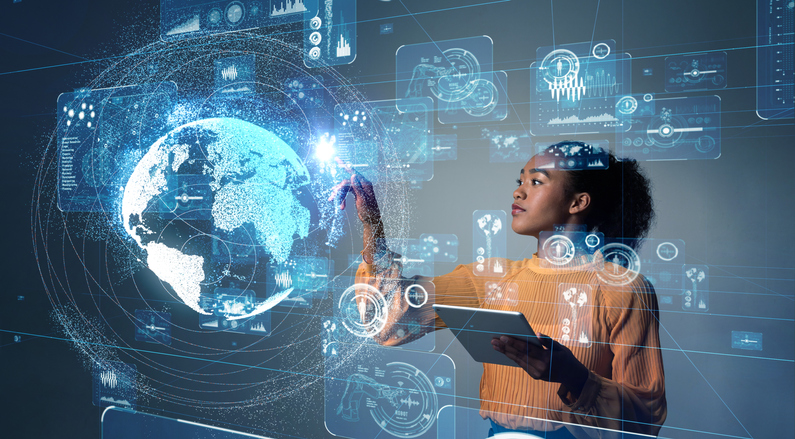
2. Quantum Computing Revolution
Quantum computing promises to solve problems that classical computers cannot. From drug discovery to climate modeling, industries that rely on heavy computation will experience a massive leap forward. Future financial institutions will use quantum algorithms to detect fraud instantly, while logistics companies will optimize global supply chains with unmatched accuracy. As quantum computing becomes commercially viable, it will redefine the limits of human problem-solving capabilities.
3. Extended Reality (XR): Blending Physical and Virtual Worlds
Augmented Reality (AR), Virtual Reality (VR), and Mixed Reality (MR) will converge into a broader field known as Extended Reality (XR). This innovation will blur the boundaries between physical and digital existence. Imagine attending a global conference not through a Zoom call, but by walking into a virtual room where holographic avatars interact as naturally as in real life. Education will be revolutionized, as students can explore history by walking through ancient civilizations in virtual environments. Retail will thrive on immersive shopping experiences where customers “try before they buy” from the comfort of their homes.
4. Green and Sustainable Tech
The future of technology must address global environmental challenges. Innovations in renewable energy storage, smart grids, and eco-friendly materials will power the green revolution. Smart cities will rely on IoT-based infrastructure to reduce waste, optimize traffic flow, and conserve energy. Electric and hydrogen-powered vehicles will dominate transportation, while green AI will minimize energy consumption in data centers. Tech will no longer be only about convenience—it will be about survival and sustainability.
5. Human-Computer Integration
Neurotechnology is paving the way for direct communication between the human brain and digital devices. Brain-Computer Interfaces (BCIs) will allow individuals to control machines through thought alone, revolutionizing healthcare for patients with disabilities. Beyond medicine, this integration will enable faster learning, memory enhancement, and even augmented creativity. The line between human and machine intelligence will blur, opening both exciting opportunities and ethical challenges.
6. Space and Interplanetary Tech
With private companies entering space exploration, the future will extend beyond Earth. Advanced robotics, AI-controlled spacecraft, and sustainable space habitats will make interplanetary travel more practical. Technologies developed for space exploration—like solar power advancements, radiation shielding, and closed-loop life systems—will also benefit life on Earth. Space tech innovations will not only expand human reach but also accelerate global scientific progress.
Conclusion
The future of technology is about integration, intelligence, and sustainability. Every innovation—from AI to quantum, from XR to BCIs—is interconnected, shaping a digital ecosystem that redefines human potential. Businesses that adapt early will lead, while societies that embrace these changes will thrive. Ultimately, the future of tech is not just about machines becoming smarter, but about humans becoming more capable, creative, and connected.